Dutch · Advanced
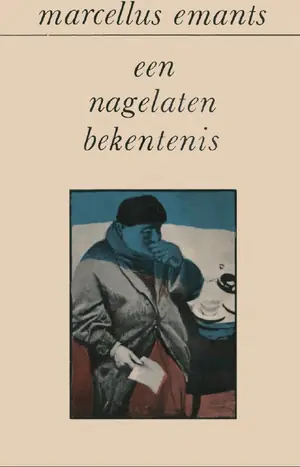
Read Een nagelaten bekentenis in Dutchwith every sentence explained
English title: A Posthumous Confession
Marcellus Emants · 1894
Free to start · iPhone, iPad & Mac
About the book
Een nagelaten bekentenis by Marcellus Emants was first published in 1894. In Passage you read the full text in the original Dutch, marked advanced and filed under mystery and crime and thriller and suspense. It runs to about 73,900 words.
“My wife is dead and buried.” A man sits down to tell the whole truth — about himself.
Willem Termeer is thirty-five, wealthy, idle and utterly alone in his silent house. His wife Anna is dead, and he carries a secret he can share with no living soul. So he picks up his pen and begins to write it all down, from the very beginning: a sickly, lonely childhood, a cold father, humiliations at school, desires he was ashamed of, and the strange, half-hearted courtship that led him into marriage.
Page by page, with chilling honesty and flashes of dark humour, Willem lays himself bare — his envy, his self-pity, his weakness — and leads the reader, step by careful step, toward the night that changed everything.
Marcellus Emants' A Posthumous Confession (1894) shocked Dutch readers with its merciless psychology. A forerunner of the modern novel told from inside a guilty mind, it was translated into English by the Nobel laureate J.M. Coetzee.
- Author
- Marcellus Emants
- First published
- 1894
- Language
- Dutch
- Level
- Advanced
- Genre
- Mystery and Crime, Thriller and Suspense
- Length
- About 73,900 words
How it opens
Mijn vrouw is dood en al begraven.
Ik ben alleen in huis, alleen met de twee meiden.
Dus ben ik weer vrij; maar wat baat me nu die vrijheid?
Ten naastenbij kan ik krijgen, wat ik sinds twintig jaar - ik ben vijf en dertig - verlangd heb; maar thans durf ik 't niet nemen en zoo heel veel zou ik er toch niet meer van genieten.
Reading Een nagelaten bekentenis in Passage
Passage sets the book as a quiet, paginated reader in Dutch. Read at your own pace, and when a sentence stops you, tap it. You get:
- a natural translation of that exact sentence,
- a short note on the grammar, in plain words,
- the key words, which you can save with the sentence they came from,
- all of it in English, Spanish, French, German, Italian, Turkish or Portuguese, whichever you read best.
It's marked advanced, with richer vocabulary and longer sentences. If it feels heavy, start with an intermediate Dutch book and come back to it. The words you save come back later in short review games, so the book keeps teaching after you close it.