Dutch · Intermediate
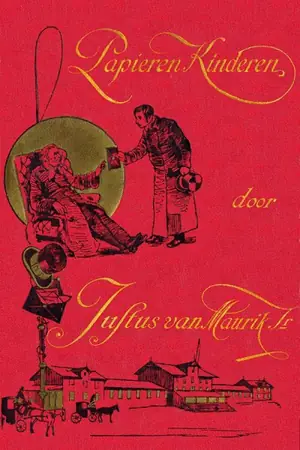
Read Papieren kinderen in Dutchwith every sentence explained
English title: Paper Children
Justus van Maurik · 1888
Free to start · iPhone, iPad & Mac
About the book
Papieren kinderen by Justus van Maurik was first published in 1888. In Passage you read the full text in the original Dutch, marked intermediate and filed under historical fiction. It runs to about 64,300 words.
Old actors, grumpy barons, cab drivers and a grocer's pretty daughter. Amsterdam, with a wink.
Justus van Maurik was a cigar manufacturer, playwright and one of the most popular storytellers of 19th-century Amsterdam, and Paper Children (1888) — his name for the stories he brought into the world — shows him at his liveliest.
In “A Benefit”, a shabby old actor nervously climbs the stairs of his successful former pupil to ask a favour. In “Dirk the Snorder”, an unlicensed cabman shivers through a freezing night outside Central Station, with a horse that has seen better days. “How Jetje Was Kissed” tells of a widowed grocer on the Nieuwendijk who guards his laughing daughter from every young man in the neighbourhood — in vain. Other pieces take us to a German spa, into a picture-perfect marriage and to the table of a fashionable professional dinner guest.
Funny, warm-hearted and full of the sounds of the city, these stories are a delightful window onto old Amsterdam.
- Author
- Justus van Maurik
- First published
- 1888
- Language
- Dutch
- Level
- Intermediate
- Genre
- Historical Fiction
- Length
- About 64,300 words
How it opens
Daar stond hij dan nu voor de deur, gereed om te schellen.
Met een zucht, die als een zenuwachtige huivering over zijn lippen gleed, zei hij in zichzelf: „Hier moet ’t zijn,” en keek oplettend naar de zwarte letters op ’t porseleinen naambordje aan den deurpost.
Reading Papieren kinderen in Passage
Passage sets the book as a quiet, paginated reader in Dutch. Read at your own pace, and when a sentence stops you, tap it. You get:
- a natural translation of that exact sentence,
- a short note on the grammar, in plain words,
- the key words, which you can save with the sentence they came from,
- all of it in English, Spanish, French, German, Italian, Turkish or Portuguese, whichever you read best.
It's marked intermediate: comfortable once everyday Dutch feels familiar, with the harder sentences one tap away. The words you save come back later in short review games, so the book keeps teaching after you close it.