English · Advanced
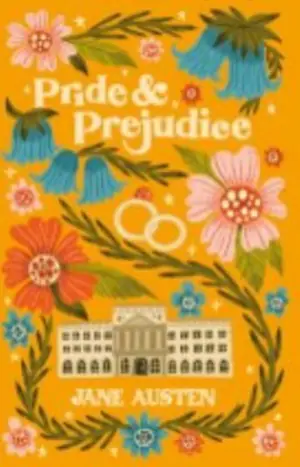
Read Pride and Prejudice in Englishwith every sentence explained
Jane Austen · 1813
Free to start · iPhone, iPad & Mac
About the book
Pride and Prejudice by Jane Austen was first published in 1813. In Passage you read the full text in the original English, marked advanced and filed under historical fiction and romance. It runs to about 121,500 words.
Five daughters. No fortune. One very proud gentleman.
Mrs Bennet has a single mission: to marry off her five daughters before the family home passes to a distant cousin. So when wealthy, good-natured Mr Bingley rents the grand house at Netherfield, the whole neighbourhood starts buzzing.
But it is Bingley's friend, the rich and haughty Mr Darcy, who catches the eye of Elizabeth Bennet — and not in a good way. Quick-witted and sure of her own judgement, Elizabeth decides she knows exactly what kind of man he is. First impressions, it turns out, can be dangerously persuasive.
Sparkling with wit and irony, Pride and Prejudice is the most beloved romance in English literature, retold in countless films, series and spin-offs for over two hundred years.
- Author
- Jane Austen
- First published
- 1813
- Language
- English
- Level
- Advanced
- Genre
- Historical Fiction, Romance
- Length
- About 121,500 words
How it opens
IT is a truth universally acknowledged, that a single man in possession of a good fortune must be in want of a wife.
However little known the feelings or views of such a man may be on his first entering a neighbourhood, this truth is so well fixed in the minds of the surrounding families, that he is considered as the rightful property of some one or other of their daughters.
Reading Pride and Prejudice in Passage
Passage sets the book as a quiet, paginated reader in English. Read at your own pace, and when a sentence stops you, tap it. You get:
- a natural translation of that exact sentence,
- a short note on the grammar, in plain words,
- the key words, which you can save with the sentence they came from,
- all of it in English, Spanish, French, German, Italian, Turkish or Portuguese, whichever you read best.
It's marked advanced, with richer vocabulary and longer sentences. If it feels heavy, start with an intermediate English book and come back to it. The words you save come back later in short review games, so the book keeps teaching after you close it.