English · Advanced
Read Great Expectations in Englishwith every sentence explained
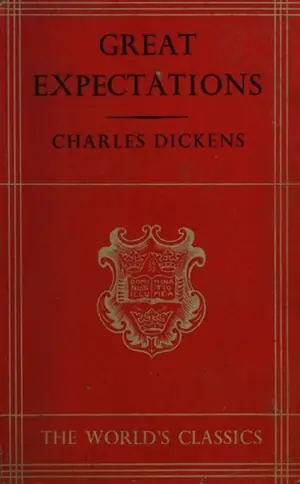
Charles Dickens · 1861
Free to start · iPhone, iPad & Mac
About the book
Great Expectations by Charles Dickens was first published in 1861. In Passage you read the full text in the original English, marked advanced and filed under historical fiction and romance. It runs to about 184,200 words.
An escaped convict. A jilted bride. A mysterious fortune.
Young Pip is an orphan raised "by hand" by his fierce sister and her gentle husband Joe, the village blacksmith, on the misty Kent marshes. One evening in a lonely churchyard, a terrifying escaped convict seizes him and demands food — a meeting Pip will never forget.
Soon after, he is summoned to Satis House, where the eccentric Miss Havisham still wears her yellowed wedding dress among stopped clocks, and where the cold, beautiful Estella teaches him to be ashamed of being common. Then a lawyer arrives with astonishing news: an unknown benefactor wants to make Pip a gentleman.
Full of unforgettable characters, Great Expectations is often called Dickens's finest novel — a story of ambition, guilt and what it really means to be a gentleman.
- Author
- Charles Dickens
- First published
- 1861
- Language
- English
- Level
- Advanced
- Genre
- Historical Fiction, Romance
- Length
- About 184,200 words
How it opens
My father’s family name being Pirrip, and my Christian name Philip, my infant tongue could make of both names nothing longer or more explicit than Pip. So, I called myself Pip, and came to be called Pip.
I give Pirrip as my father’s family name, on the authority of his tombstone and my sister,—Mrs. Joe Gargery, who married the blacksmith. As I never saw my father or my mother, and never saw any likeness of either of them (for their days were long before the days of photographs), my first fancies regarding what they were like were unreasonably derived from their tombstones.
Reading Great Expectations in Passage
Passage sets the book as a quiet, paginated reader in English. Read at your own pace, and when a sentence stops you, tap it. You get:
- a natural translation of that exact sentence,
- a short note on the grammar, in plain words,
- the key words, which you can save with the sentence they came from,
- all of it in English, Spanish, French, German, Italian, Turkish or Portuguese, whichever you read best.
It's marked advanced, with richer vocabulary and longer sentences. If it feels heavy, start with an intermediate English book and come back to it. The words you save come back later in short review games, so the book keeps teaching after you close it.