Spanish · Advanced
Read Novelas ejemplares in Spanishwith every sentence explained
English title: Exemplary Novels
Miguel de Cervantes · 1613
Free to start · iPhone, iPad & Mac
About the book
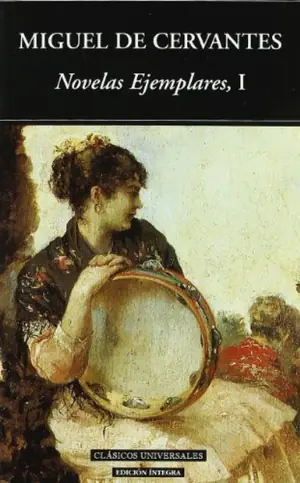
Novelas ejemplares by Miguel de Cervantes was first published in 1613. In Passage you read the full text in the original Spanish, marked advanced and filed under historical fiction and romance. It runs to about 188,200 words.
Gypsies and thieves, lovers in disguise, and two dogs who learn to talk.
Eight years after Don Quixote, Cervantes published twelve short novels that took Spanish storytelling in bold new directions. Here are tales of kidnapped girls and long-lost heirs, sea voyages and sword fights, but also sharp, funny portraits of everyday life in Golden Age Spain.
In "La gitanilla", a young nobleman gives up everything to join a band of gypsies for the love of the dazzling Preciosa. "Rinconete y Cortadillo" follows two teenage runaways into Seville's surprisingly well-organized guild of thieves. In "El licenciado Vidriera", a brilliant student becomes convinced he is made of glass, and in the wonderful "El coloquio de los perros", two dogs in a hospital suddenly discover they can speak and spend the night trading stories.
Cervantes called himself the first to write novellas in Spanish, and the Exemplary Novels remain, after Don Quixote, his most loved and influential work.
- Author
- Miguel de Cervantes
- First published
- 1613
- Language
- Spanish
- Level
- Advanced
- Genre
- Historical Fiction, Romance
- Length
- About 188,200 words
Reading Novelas ejemplares in Passage
Passage sets the book as a quiet, paginated reader in Spanish. Read at your own pace, and when a sentence stops you, tap it. You get:
- a natural translation of that exact sentence,
- a short note on the grammar, in plain words,
- the key words, which you can save with the sentence they came from,
- all of it in English, Spanish, French, German, Italian, Turkish or Portuguese, whichever you read best.
It's marked advanced, with richer vocabulary and longer sentences. If it feels heavy, start with an intermediate Spanish book and come back to it. The words you save come back later in short review games, so the book keeps teaching after you close it.