Spanish · Advanced
Read Sonata de estío in Spanishwith every sentence explained
English title: Summer Sonata
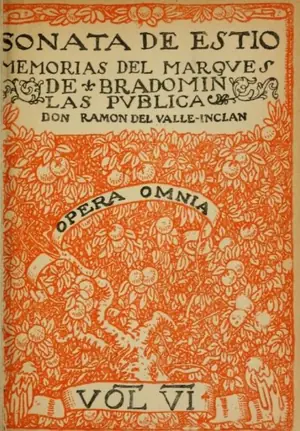
Ramón del Valle-Inclán · 1903
Free to start · iPhone, iPad & Mac
About the book
Sonata de estío by Ramón del Valle-Inclán was first published in 1903. In Passage you read the full text in the original Spanish, marked advanced and filed under historical fiction and romance. It runs to about 22,500 words.
A heartbroken dandy sails for Mexico. Among Mayan ruins, he meets a woman as dangerous as the tropics.
To forget an unhappy love affair, the young Marquis of Bradomín crosses the ocean on the English frigate La Dalila, bound for the Mexico of his conquistador ancestors. At the first port of call he rides out under a burning sun to the ruins of an ancient city, and there, resting in the shade of a pyramid among her Indian servants, he sees the Niña Chole: a bronze-skinned beauty in an embroidered huipil, with the very smile of the woman he is trying to forget.
Fate soon throws them together again, and Bradomín follows her into a world of sharks, bandits and blazing heat, and into a passion that hides a dark secret.
Ramón del Valle-Inclán's Summer Sonata (1903) is the most exotic and sensual of Bradomín's four memoirs. Written in dazzling modernist prose, it is a feast of colour, irony and danger.
- Author
- Ramón del Valle-Inclán
- First published
- 1903
- Language
- Spanish
- Level
- Advanced
- Genre
- Historical Fiction, Romance
- Length
- About 22,500 words
How it opens
QUERÍA OLVIDAR unos amores desgraciados, y pensé recorrer el mundo en romántica peregrinacion. ¡Aún suspiro al recordarlo! Aquella mujer tiene en la historia de mi vida un recuerdo galante, cruel y glorioso, como lo tienen en la historia de los pueblos Thais la de Grecia, y Ninon la de Francia, esas dos cortesanas menos bellas que su destino. ¡Acaso el único destino que merece ser envidiado! Yo hubiérale tenido igual, y quizá más grande, de haber nacido mujer: Entonces lograría lo que jamás pude lograr. Á las mujeres para ser felices les basta con no tener escrúpulos, y probablemente, no los hubiera tenido esa quimérica Marquesa de Bradomín.
Reading Sonata de estío in Passage
Passage sets the book as a quiet, paginated reader in Spanish. Read at your own pace, and when a sentence stops you, tap it. You get:
- a natural translation of that exact sentence,
- a short note on the grammar, in plain words,
- the key words, which you can save with the sentence they came from,
- all of it in English, Spanish, French, German, Italian, Turkish or Portuguese, whichever you read best.
It's marked advanced, with richer vocabulary and longer sentences. If it feels heavy, start with an intermediate Spanish book and come back to it. The words you save come back later in short review games, so the book keeps teaching after you close it.